

January 2026 marks a golden milestone for one of the most beloved and enduring classics in automotive history - the Mercedes-Benz 123-series. Launched 50 years ago, this legendary model range blended timeless style, durability, and forward-thinking engineering to become one of the most successful and respected vehicles of its time.
Today, the 123-series is celebrated not just as a classic Mercedes, but as a benchmark for build quality and longevity. At Footman James, where classic motoring is a passion and a profession, we’re proud to honour this automotive legend on its 50th anniversary - and to recognise its growing stature in the world of collectable cars.
When the 123-series debuted in January 1976, it had big shoes to fill. Its predecessor, the W114/W115 “Stroke 8,” had helped modernise the Mercedes brand in the late 1960s. But the new 123 took things a step further.
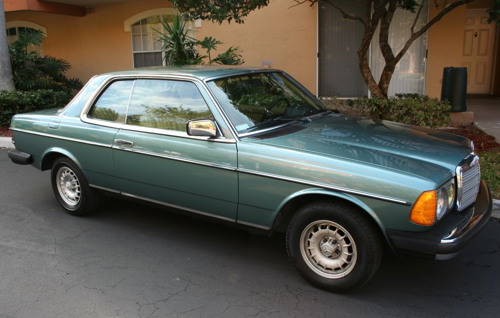
From the outset, the 123-series - known internally as the W123 - was engineered to embody Mercedes-Benz’s values of safety, comfort, and unmatched reliability. It was introduced in saloon form first, with coupé (C123) and estate (S123) versions following soon after. A long-wheelbase limousine (V123) rounded out the range.
It wasn’t a car that shouted for attention - but it quietly became the car that everyone respected.
The W123 was renowned for being almost indestructible. Built during an era when Mercedes-Benz was more focused on over-engineering than cutting costs, the 123-series earned a reputation for:
Bulletproof engines – particularly the OM616 and OM617 diesel units
Rust-resistant construction (impressive for the 1970s)
Solid, reassuring handling
Simple mechanicals that made it a favourite for mechanics and owners alike
Whether taxiing passengers in West Berlin or covering hundreds of thousands of miles in the Middle East or Africa, the W123 became synonymous with reliability in extreme conditions.
The W123's styling is a masterclass in understatement - square-jawed, confident, and perfectly proportioned. With its chrome trim, horizontal grille, and stately presence, it was every inch the executive car of its time. But the clean lines and subtle design have aged beautifully, making it a favourite today among classic car collectors looking for elegance without extravagance.
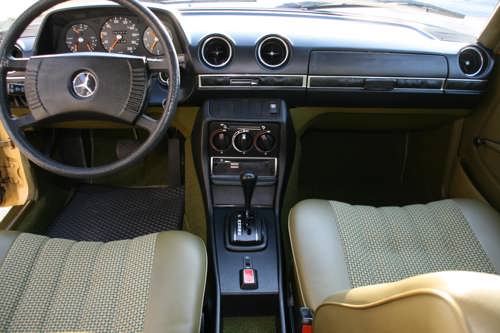
Inside, the 123 offered a level of comfort and attention to detail that many rivals struggled to match. From zebrano wood veneers to vacuum-operated climate controls, it was a cabin built to last - and it often did.
The W123 didn’t just succeed in Europe. It became a global ambassador for Mercedes-Benz - the default vehicle for diplomats, dignitaries, and taxi fleets across the world. In fact, in many countries, it wasn’t unusual to see W123 taxis with 500,000+ miles on the clock, still running strong.
Its reputation for dependability, comfort, and low running costs made it a logical choice for those who needed a car that simply would not fail. In some parts of Africa and the Middle East, W123s are still in daily use today, half a century later.
For years, the W123 was the quiet classic - often overlooked in favour of its sportier or flashier siblings. But in recent years, enthusiasts have started to realise what a gem it truly is.
Values are steadily climbing, especially for:
Low-mileage 280CE coupés
Well-preserved estates (T-models)
Rare manual diesels
Early models with original paint and trim
The W123 has crossed from dependable workhorse to coveted collector car, thanks to its usability, elegance, and undeniable charm.
At Footman James, we’ve seen increased interest in W123s from both long-time Mercedes enthusiasts and newer collectors who appreciate the model’s blend of form and function.
The W123 by the numbers
Production years: 1976-1985
Total units produced: Over 2.7 million
Most popular version: 240D (diesel saloon)
Longest-lived engine: The 3.0L OM617 diesel, known to exceed 500,000 miles
First Mercedes estate: The S123 was the first official estate (T-model) from Mercedes-Benz
Owning a 123-series today
If you’re lucky enough to own a W123, you’re not just driving a car - you’re stewarding a piece of automotive history. The model’s simple mechanics and strong parts support make it one of the most usable classics on the road today.
To ensure your classic is properly protected and valued, it's worth keeping an eye on the market. The W123’s steady rise means it’s important to stay up to date on its current worth.
Know what your W123 is worth
Wondering "how much is my classic car worth?" If you're a W123 owner - or considering becoming one - use the Footman James Classic Car Valuation Tool. It's free to use, updated with real-world market data, and a great way to stay informed as your classic appreciates.


