

When MG unveiled the MGF in 1995, it marked a long-awaited return to what the brand had always done best: building spirited, affordable, open-top sports cars for the driving enthusiast. Now, three decades later, the MGF stands not just as a beloved classic but as a pivotal chapter in MG’s storied history - a bridge between the brand’s past glory and its future revival.
When you think of MG, the mind’s eye will inevitably conjure up the MGB – a 60s/70s icon that proved to be a not only a UK sensation but a model that was recognised worldwide. But the MGF – less revered – is a key model in this brand’s illustrious history. It is important.
As the MGF celebrates its 30th anniversary, classic car fans are reflecting on what made this mid-engined marvel so unique, and how its spirit is being reborn in the form of MG’s first all-new roadster in years - the MG Cyberster, due in 2024.
To fully appreciate the MGF’s legacy, one must first understand the void it filled. MG had been without a true two-seat sports car since the end of MGB production in 1980. Though the brand name endured through saloons and badge-engineered hatchbacks, the soul of MG had gone quiet.
That changed in March 1995, when the wraps came off the MGF at the Geneva Motor Show. Designed in-house at Rover Group under Gerry McGovern (former Chief Creative Officer at Jaguar Land Rover), the MGF was a bold move. Unlike its classic predecessors, which used front-engine, rear-drive layouts, the MGF adopted a mid-engine, rear-wheel-drive configuration - a first for MG and a rarity in the affordable sports car market.
The engine was Rover’s 1.8-litre K-Series - lightweight, rev-happy, and, in VVC form, a technical marvel of its day. Hydragas suspension gave the MGF an unusually smooth ride for a small roadster, while still offering nimble handling that earned praise from enthusiasts and journalists alike.
The MGF quickly became a success in the UK and across Europe. In fact, in 1998, it was the best-selling sports car in Britain, outpacing even the Mazda MX-5. More than 77,000 MGFs were produced before a facelift and rebranding brought the MG TF to life in 2002.
While the MG TF continued to evolve, the MGF’s original formula had already made its mark. Affordable, accessible, and proudly British, it reminded a generation what the MG badge was all about. Today, many of those original models have become cherished classics, supported by a dedicated community and vibrant club scene.
One of the key custodians of the MGF legacy is the MGF Register, part of the MG Car Club. Hosting events, road trips, and technical forums, the Register has helped keep thousands of MGFs on the road - and the community spirit alive.
What makes the MGF especially important today is how its DNA can be seen in the next chapter of MG’s journey. With the MG Cyberster, MG is returning to the two-seat, open-top format for the first time since the TF’s end in 2011. The Cyberster is everything the MGF was in 1995: bold, innovative, and unmistakably different from its peers.
Of course, it’s not just the layout that connects the Cyberster to its 30-year-old ancestor. The MGF proved that MG could innovate without forgetting its roots - combining everyday usability with cutting-edge engineering. The Cyberster carries that torch forward into the electric age.
Where the MGF had Hydragas suspension and a mid-mounted K-Series, the Cyberster brings advanced battery tech, scissor doors, and a sleek electric drivetrain - but the same rebellious spirit is there. And as MG celebrates its centenary, the timing couldn’t be better.
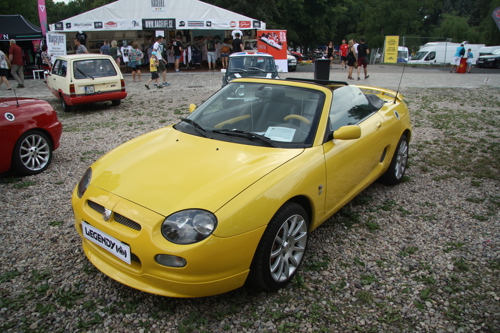
For many classic car owners, the MGF represents the last era of MG’s British-built sports cars. It was the product of a time when MG still built cars in Longbridge, still used homegrown engines, and still created cars that put a grin on your face at every corner.
But the MGF also matters because it bridged the gap between old and new. It introduced a new generation to MG ownership, laid the groundwork for future MG models, and helped prove that small sports cars still had a place in the modern world.
And perhaps most importantly, the MGF showed that passion, innovation, and a little British eccentricity could still produce something truly special.
As we celebrate 30 years of the MGF, we’re not just looking back - we’re looking forward. With classic MGFs becoming more collectible and enthusiast support growing every year, now is the perfect time to appreciate this modern classic. Whether it's being driven through country lanes or displayed at anniversary events, the MGF is enjoying a well-deserved moment in the spotlight.
Meanwhile, with the Cyberster on the horizon, MG’s future as a sports car brand seems more assured than it has in years. And if the MGF taught us anything, it’s that MG knows how to come back - with style.


