

Some cars arrive with drama. Some arrive with wings, racing stripes or a badge that makes people lower their sunglasses and say things like “pedigree”.
The Austin A35 did none of that.
It arrived in 1956 looking neat, upright and deeply sensible, like it had turned up early for church and remembered to bring sandwiches. And yet, 70 years later, it’s still here – still loved, still raced, still popping up at shows, and still managing to look faintly pleased with itself.
That’s the thing about the A35. It wasn’t glamorous in the traditional sense. It didn’t have the swoop of an Italian GT or the chest-out swagger of a British sports car. It was a small family car from Longbridge, designed to be affordable, practical and dependable. But give it a few decades, a bit of nostalgia and a healthy dose of underdog charm, and suddenly it becomes one of those classics people can’t help smiling at.
The A35 replaced the Austin A30, which had already done a solid job of putting small-car motoring within reach of ordinary post-war families. The new car wasn’t a wild reinvention. This was Britain in the 1950s, after all – nobody was going to burst through the factory doors shouting “make it radical” unless they wanted some very stern looks.
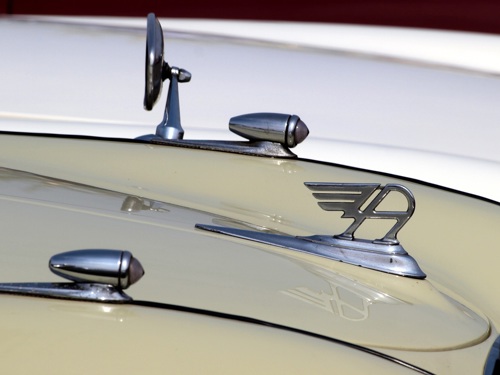
Instead, Austin made it better. The A35 gained a larger 948cc A-Series engine, improved gear ratios and a bit more performance. It also received a bigger rear window, which meant reversing was slightly less like peering through a letterbox. There were flashing indicators too, replacing trafficators, those charming little semaphore arms that now feel like something from a Wallace & Gromit sketch.
Actually, Wallace & Gromit isn’t a bad place to go with the A35. A van version famously became part of their world, which feels entirely right. The A35 has that same quality: practical, British, modestly eccentric and somehow more expressive than it has any right to be.
It was offered in several forms, including two-door and four-door saloons, a Countryman estate, a van and even a rare pick-up. The saloon was the familiar little family runabout, while the van became a proper workhorse. For small businesses, tradespeople and delivery drivers, the A35 van was exactly the sort of thing Britain ran on: not flashy nor fast, but cheap to run and willing to get on with it.
And yet, underneath the cardigan, there was a surprisingly game little machine.
The A35’s motorsport life is one of the reasons it remains so much fun today. It might look like the sort of car that should be carrying library books, but in historic racing it’s a tiny terrier. Tuned A30s and A35s can be seen leaning heroically through corners, tyres squealing, drivers sawing at the wheel, looking as if they’re trying to escape from their own body roll.
There’s something wonderfully funny about watching an A35 being driven flat-out. A large, serious performance car looks like it’s doing what it was born to do. An A35 looks like it’s got caught up in something but is determined not to let the side down. That makes it heroic in its own way.
Of course, in period, it wasn’t pretending to be a racing car. It was transport. Sensible, useful, everyday transport. It arrived at a time when car ownership was becoming more attainable, but still mattered. A family car wasn’t just a purchase – it was freedom, status and possibility. Trips to the seaside, visits to relatives, commuting without relying on the bus. The A35 gave people independence in a compact, approachable package.
That’s easy to overlook now, when even a small modern hatchback has more technology than a 1950s executive saloon could dream of. But the A35 didn’t need much to do its job. Four wheels, a small engine, proper seats, a boot and a cheerful willingness to start on cold mornings. Well, most cold mornings. Let’s not get carried away.
It also had the advantage of simplicity. Today, that’s a huge part of the appeal. Owners can understand it, mend it, tinker with it and keep it going without needing a laptop, a diagnostic subscription and the patience of a saint. Parts support is strong, the club scene is enthusiastic, and the cars themselves have a way of making people want to help. Break down in a modern SUV and people may tut. Break down in an A35 and someone will probably appear with a flask and a story about their uncle’s one.
Seventy years on, the Austin A35 is no longer just sensible transport. It’s a reminder of a different motoring world – slower, simpler and probably a bit draughtier, but full of character.
It may not have been built to be glamorous, but that hardly matters now. The A35’s charm comes from being exactly what it is: small, honest, useful and unexpectedly lovable.


